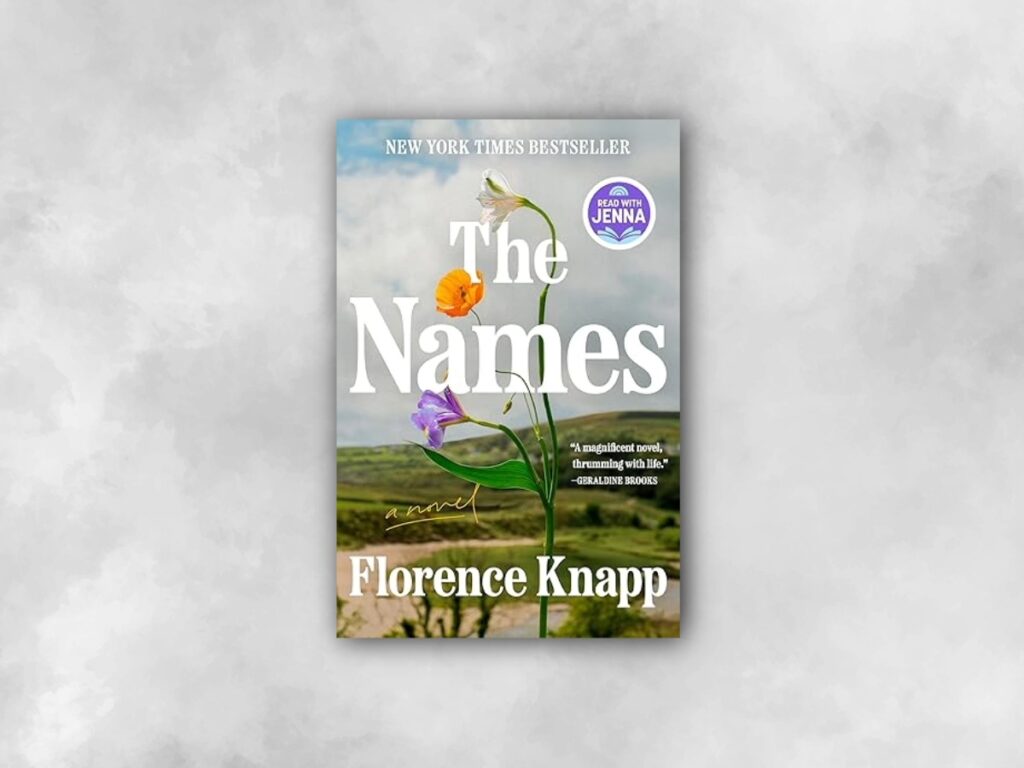
Most book clubs allot 2 hours to nosh, have a beverage and then talk about the book. For The Names, you may need a bit more than that because Florence Knapp has packed a lot into this 328 page book.
The novel’s structure and the speculutive “what if” of the three different storylines could fill a lot of conversation time. But there’s also the intense family drama at play covering themes like the damaging nature of domestic abuse, love and loyalty in sibling relationships, sacrifices in parenting, and regret.
If you’re not quite sure where to even start, I’ve got you (and your book club) covered. These book club questions for The Names will help you have an engaging and structured book group discussion. There are 10 discussion prompts, a synopsis, and some selected (and mixed) reviews. All of which will help you have a rich discussion.
If you loved the book and want more like it, there are also some related reads at the end.
(This article contains affiliate links. This means that if you choose to purchase, I’ll make a small commission.)
Synopsis for The Names
(I always choose to provide the publisher synopsis because I feel that it’s worthwhile to discuss whether the official book description actually squared with your experience of the book.)
The Names, Florence Knapp
In the wake of a catastrophic storm, Cora sets off with her nine-year-old daughter, Maia, to register her son’s birth. Her husband, Gordon, a local doctor, respected in the community but a terrifying and controlling presence at home, intends for her to name the infant after him. But when the registrar asks what she’d like to call the child, Cora hesitates…
Spanning thirty-five years, what follows are three alternate and alternating versions of Cora’s and her young son’s lives, shaped by her choice of name. In richly layered prose, The Names explores the painful ripple effects of domestic abuse, the messy ties of family, and the possibilities of autonomy and healing.
With exceptional sensitivity and depth, Knapp draws us into the story of one family, told through a prism of what-ifs, causing us to consider the “one . . . precious life” we are given. The book’s brilliantly imaginative structure, propulsive storytelling, and emotional, gut-wrenching power are certain to make The Names a modern classic.
10 Book Club Questions for The Names
These questions have been tailored to this book’s specific reading experience, but if you want more ideas, I also have an article with 101 generic book club questions.
- “[…]because tomorrow — if morning comes, if the storm stops raging—Cora will register the name of her son. Or perhaps, and this is her real concern, she’ll formalize who he will become”.
Does the name itself deliver the boy’s fate? Or is it more driven by the actions of Cora and Gordon? - When Maia asks why the same name thing matters, Cora considers that “Because some people— like Gordon’s father— travel through life believing themselves so far beyond improvement, they come to think their children, and their children’s children, should all be made in their name. Because sometimes their need to please previous generations is greater than their need to love future ones.”
That was certainly true in this novel. But what about in the broader culture. Is “same naming” an homage to family history or an ill-considered need to please? - The publisher’s synopsis (noted above), Gordon is called a “controlling presence at home”.
For me, “deadly abuser” and “sociopath” seemed more on the mark. Read the synopsis and talk about why you think the publisher chose the language that they did, and whether it jived with your own reading experience. - Cora observes that “Mehri has always treated parenting like she’s cooking a big warming pan of something: a pinch of that, a pinch of this, she’s sure it will turn out fine in the end. Cora’s own approach has always felt more like baking a cake: carefully measuring out ingredients and trying not to ruin everything. She admires Mehri’s way.”
Which option best fits your parenting style, or that of your own parents? - Let’s talk about the book structure. Three timelines presented in short chapters at seven year intervals. Did the structure work for you? Were you able to keep things straight?
- One of the three-star reviews of the book noted that “It’s a fine line between a high concept and a gimmick”. They felt it was too gimmicky. How do you feel?
- Some of the secondary characters (like Lily, Felix, and Cian) feature prominently in one storyline but either peripherally or not at all in others. Did you follow that? What was Knapp accomplishing with that choice?
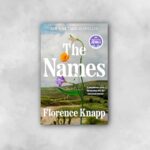
- In the acknowledgement, Knapp mentions the hybrid flower on the cover and implies that each represents either Gordon, Julian or Bear. Which flower would you assign to each character and why?
- In the Gordon timeline, Cora reflects that “She’s been given a life, but she has somehow failed to spend it.”
Talk about regret and how it affected each of the characters at different points in their lives. - In the epilogue, Gordon Sr. lays dying on the floor on the throes of a heart attack. He re-imagines choices that he and Cora could have made differently. Did you follow what was going on in the epilogue? And if so, do you think it added to or detracted from the larger story?
Selected Reviews for The Names
“Knapp pulls off a literary hat trick here: The Names is sharp, gut punchingly emotional, and weirdly suspenseful. You will find yourself wondering things like, “What if I’d been named Persephone? Would I be a poet with a wolfdog and a collection of vintage blenders?” That’s the magic here, Knapp doesn’t just explore the power of a name, she weaponizes it.”
“[…]I believe it is being marketed erroneously. The subject of the story is misleading in so much as the summary states that it is about how the impact of your name can change the course of your life when in reality the book explores how staying in a situation of domestic abuse alters the life of the children in the family.”
“Started strong enough but fell down about a third of the way in and never recovered. The characters were woefully underdeveloped: as you’re constantly shifting between three different timelines you don’t spend the whole novel with each ‘version’ of the character, but this also means you don’t get to know them well enough, especially in the cases of the eventual wives and girlfriends who are entirely forgettable.”
“If Johnny Cash’s A Boy Named Sue was part of the multi-verse with less fist-fighting your dad in a bar but just as much domestic abuse. Imaginative and a great examination of resilience.”
What to Read Next
This book is a Jenna’s book club pick. If you like her recommendations, here’s the full list of Jenna’s picks. It includes links to any guides that we have for those books.
If you like a family drama, we have a few book club guides that will scratch that itch. Each has a non-spoiler toward the top along with a link to Amazon reviews and pricing.
- Sandwich by Catherine Newman (guide here): Annual family beach rental, aging parents and meloncholy.
- The Unmaking of June Farrow by Adrienne Young (guide here): A family curse, small town rumors and a mysterious time-traveling door.
- Cursed Daughters by Oyinkan Braithwaite (guide here): Also a family curse and too much unspoken family pain.
- Pineapple Street by Jenny Jackson (guide here): The haves and have nots, giving it all up for motherhood and the family outsider.
- Tom Lake by Ann Patchett (guide here): An orchard, youthful love and family dynamics.
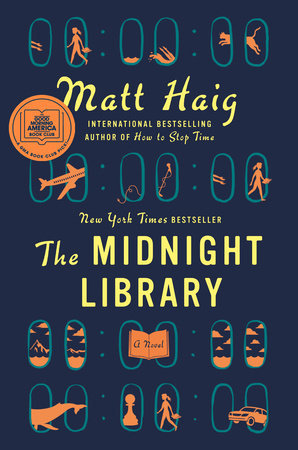
The Midnight Library, by Matt Haig
Haig’s book takes an unflinching look at all of the “what ifs” of our lives. The main character Nora lands in a liminal library after an attempted suicide. The Librarian, offers Nora a series of second (third, fourth etc) chances to choose another version of her life. What if Nora had become a competitive swimmer? What if she had remained in the band? The library’s books give her that opportunity to explore those options…but Nora has to make a choice.
Here’s our Midnight Library discussion guide. If you’ve already read this one, we’ve also got a whole article featuring books like The Midnight Library.
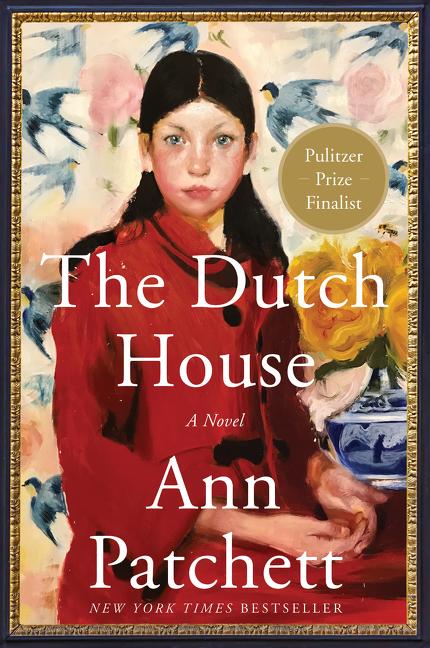
The Dutch House, Ann Pratchett
If you’re keen to explore more sibling relationships and navigating a difficult childhood, this one’s for you.
The Dutch House itself is a looming, ornate historic home that anchors a complicated three generation family story. After their father’s death siblings Danny and Maeve were unceremoniously chucked out of the house by their step-mother. They got on with their lives, but they often find themselves sitting in a car in front of the house, reworking old wounds and trying to figure out how to move past their childhood pain.
The book’s themes feature abandonment, betrayal, damaging silences, revenge and a lot of sibling loyalty.
Here’s our Dutch House discussion guide.

When Women Were Dragons, Kelly Barnhill
Cora’s role in the family gave off very 1950’s housewife vibes. If you were wanting more for her (and weren’t we all?), this is a great read for you.
The ’50’s housewives in this novel have had more than enough of their proscribed roles and submission to the patriarchy. As they each hit their personal limit, they find themselves unexpectedly morphing into dragons and literally taking flight. The premise sounds weird but Barnhill pulls it off, offering a pointed commentary on female agency.
More Guides for Jenna’s Book Club Pics
Buckeye Book Club Questions & Discuss Guide
The Names Book Club Questions and Discussion Guide
Heartwood Book Club Questions and Discussion Guide

The Husbands Book Club Questions and Discussion Guide


Haha, this is *the* ultimate book club guide, right down to the helpful guide to find dozens of book ideas link buried in the recommendations! Seriously, props for dissecting The Names with such relatable questions about parenting styles (baking vs. cooking!) and whether the flower symbolism is more literary hat trick or gimmick. And those reviews – entirely forgettable wives? *Chefs kiss!* Perfect fuel for debate. Almost as useful as the guide to books *like* it, which is itself a guide… to more guides. Youve truly weaponized book club resources!