
Letter writing is a lost art for most of us, but it’s daily nutrition for Sybil. You get the story of her adult life through a series of letters sent to a wide variety of people, some of whom she’s never even met. What a character!
The book dives pretty deeply into the nature of grief, but it also touches on themes of forgiveness (or lack thereof), unlikely friendships, staying engaged through old age, generosity and what it means to be family.
There’s a lot of grist here about here and I’ll help you sort it using these book club questions for The Correspondent. This discussion guide has a synopsis, 10 book club questions, and some selected reviews, all designed to help get the conversation flowing.
And if you loved this book and want more reads related to cranky elderly people, letter-writers, and aggrieved English Department chairs, then scroll to the bottom for some suggestions.

(This article contains affiliate links. This means that if you choose to purchase, I’ll make a small commission.)
Synopsis for The Correspondent
(I always choose to provide the publisher synopsis because I feel that it’s worthwhile to discuss whether the official book description actually squared with your experience of the book.)
The Correspondent, Virginia Evans
“Imagine, the letters one has sent out into the world, the letters received back in turn, are like the pieces of a magnificent puzzle. . . . Isn’t there something wonderful in that, to think that a story of one’s life is preserved in some way, that this very letter may one day mean something, even if it is a very small thing, to someone?”
Filled with knowledge that only comes from a life fully lived, The Correspondent is a gem of a novel about the power of finding solace in literature and connection with people we might never meet in person. It is about the hubris of youth and the wisdom of old age, and the mistakes and acts of kindness that occur during a lifetime.
Sybil Van Antwerp has throughout her life used letters to make sense of the world and her place in it. Most mornings, around half past ten, Sybil sits down to write letters—to her brother, to her best friend, to the president of the university who will not allow her to audit a class she desperately wants to take, to Joan Didion and Larry McMurtry to tell them what she thinks of their latest books, and to one person to whom she writes often yet never sends the letter.
Sybil expects her world to go on as it always has—a mother, grandmother, wife, divorcee, distinguished lawyer, she has lived a very full life. But when letters from someone in her past force her to examine one of the most painful periods of her life, she realizes that the letter she has been writing over the years needs to be read and that she cannot move forward until she finds it in her heart to offer forgiveness.
Sybil Van Antwerp’s life of letters might be “a very small thing,” but she also might be one of the most memorable characters you will ever read.
Book Club Questions for The Correspondent
These questions have been tailored to this book’s specific reading experience, but if you want more ideas, I also have an article with 101 generic book club questions.
- “Imagine, the letters one has sent out into the world, the letters received back in turn, are like the pieces of a magnificent puzzle, or, a better metaphor, if dated, the links of a long chain, and even if those links are never put back together, which they will certainly never be, even if they remain for the rest of time dispersed across the earth like the fragile blown seeds of a dying dandelion, isn’t there something wonderful in that, to think that a story of one’s life is preserved in some way, that this very letter may one day mean something, even if it is a very small thing, to someone?”
Letter writing is such an important part of Sybil’s daily life. What about you? Do you still write letters? Is it a lost art? Did Sybil make you want to start writing more letters? - The book starts in 2012 and spans 10 years. It’s also a tight 300 pages. Evans leaves a lot of gaps in both time and tale, requiring the reader to fill in. How did that fromat work for you?
- Sybil’s letter to Devi Martinelli is a devastating confession. Discuss.
- “Grief shared, I think, can produce two outcomes. Either you bind yourselves together and hold on for dear life, or you let go and up goes a wall too high to be crossed.”
Grief pervades the narrative for multiple characters, not just Sybil. Discuss how the author tackled the subject. - At times, Sybil shares more with Harry than she does with her own family and friends. Why did she feel comfortable confiding in him?
- Sybil was enraged at Rosalie when she found out about Fiona’s visit. Was her rage warranted? And what did you think of Rosalie’s handling of the matter.
- Let’s talk about Theodore. Sybil basically ignores him for years. Then she runs over his cat. Then they developing a burgeoning friendship, only to have her fly off to hang out with her buddy in Texas. Ultimately they come together in the end. Is Theodore a saint…or a fool?
- There are a number of instances where a character goes from being a long-suffering recipient of Sybil’s demanding written missives to becoming a friend. How does Sybil manage that hat trick?
- Why, after all those decades, do Sybil and Fiona have so much trouble talking to one another? Have you seen a dynamic like that play out in your family?
- Sybil wrote to Joan Didion, Ann Patchett, Kazou Ishiguru, CS Lewis, Diana Gabaldon, and Larry McMurtry. Have you read those authors? If so, share your favorite of their works.
How about a follow-up assignment? I was so taken by this book that it motivated me to pen a letter to Virginia Evans sharing my thoughts on death and friendship and correspondence. If you’d like to do the same, you can find contact info on her author page.
Selected Reviews for The Correspondent
Use these selected Goodreads reviews to compare with your own experience of the book. Do you agree or disagree with the reviews?
“In short, she lives just as we all do, trying the best she knows how. […] That’s why I love Sybil, she tries. Not always successfully, but always whole-heartedly. She helps when she can, reaches out, isn’t afraid to admit fault or assign it.”
“But no matter how clever the form is, it can’t hide the coldness of Sybil. She is really hard to empathize with – at times she just made me angry. Her lifelong habit is pouring emotions into letters and sealing them away. It looks sensitive and delicate on the surface, but it’s really just avoidance. She’s trapped in guilt and self‑pity, hurting her loved ones along the way.”
(A review written as a letter addressed to Sybil) “[…] I have to let you know what getting to know you has meant . Every once in a while on my reading journey an unforgettable character touches my heart and you are among them . Maybe I connected with you because we’re close in age and like you I have reached the point where I have no qualms about speaking my mind . Maybe it’s because you read a lot of novels as I do and I’ve read almost every one you mentioned . I especially love that you enjoy Ann Patchett, one of my favorites. I love that you write letters to authors and just about everyone else in your life. You’re witty and downright funny at times asking a friend to be a plus one at a funeral and self deprecating about how an old black dress might look. On the other hand, the burden of grief you carried made me cry. Maybe I connected with you because I could relate to the fact that you are not perfect and made mistakes along the way.”
“While the letters handle many excellent themes and even highlight how it’s never too late to learn and to make recompense, the fact also is that there are too many disparate themes. The ‘kitchen sink’ of themes, which always creates trouble for debut authors, is overflowing in this one.”
What to Read Next
If you like the idea of reading more books with older characters, I’ve got book club guides for: How to Age Disgracefully, The 100 Year-Old Man Who Jumped Out a Window and Disappeared and Thursday Murder Club.
For some fraught mother-daughter relationships try: Cursed Daughters, I’m Glad My Mom Died, or The Many Daughters of Afong Moy.
All of my book club guides have a non-spoiler synopsis toward the top of the page, along with a link. Here are a few more ideas for you:
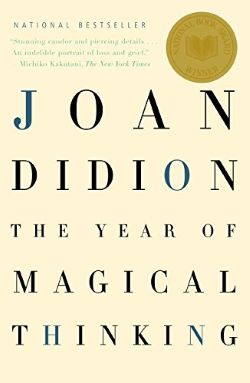
The Year of Magical Thinking, Joan Didion
Sybil has an engaging back and forth with Joan Didion, touching on the topic of grief. In this memoir, Didion explores that topic in depth. She wrote it after the sudden death of her husband and it was her way of exploring her grief.
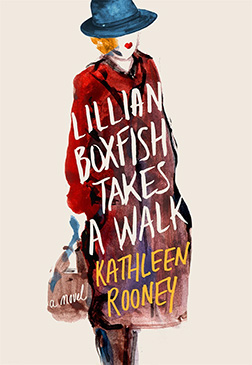
Lillian Boxfish Takes a Walk, Kathleen Rooney
If you’d like to hear from another older woman who isn’t havint it, try Lillian Boxfish.
The action in this book takes place over one New Years Eve as octogenarian Lillian walks the length of Manhattan, narrating the highs and lows of her life. She was a working woman before her time, a complicated character, a reluctant mother and a woman who takes no guff.
This was one of my favorite reads in the year that I read it. I appreciated the book’s lack of stereotyping and the Manhattan setting made me want to visit NYC again.
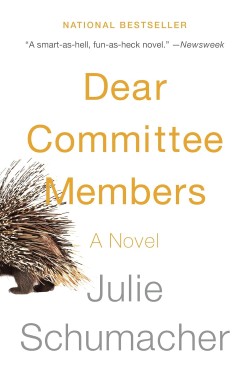
Dear Committee Members, Julie Schumacher
How about another epistolary format, kinda inspired by the Melissa, the English Department Chair, but with crankier pants.
English professor Jason Fitger vents his spleen in a series of student letters of recommendation. He strays from the task by adding his own gripes, making personal attacks and wallowing in his regrets, while generally not adhering to the typical letter of recommendation format.
The letters comprise the narrative of of Fitger’s shambles of a personal life, his umbridge at bureaucratic entropy in academia and the general decline of the humanities.
Recent Guides for Contemporary Lit
John of John Book Club Questions & Discussion Guide
Mad Mabel Book Club Questions and Discussion Guide
Yesteryear Book Club Questions and Discussion Guide

Half His Age Book Club Questions and Discussion Guide


