
I’m a sucker for any book about books, bookstores and libraries. I read widely in this sub-genre and enjoy all manner of magical books, adventurous librarians, and deadly doings that lurk behind the shelves. So, when I picked up How to Read a Book, I expected some sort of meet-cute.
Nope.
What I got what a touching story about a broken woman recently released from prison, a lonely widower and the book club leader who holds it all together. This book covers themes of forgiveness (and how it’s easy for some and hard for others), found family, iterating your way to a happier life, and how a simple summing up of someone’s life, doesn’t sum things up at all.
That’s a lot to unpack for your book club, so plan for a long meeting and some extra bottles of wine. These book club questions for How to Read a Book will help you get started with 10 discussion prompts, a synopsis, and selected reviews.
And if you want more of that, scroll to the bottom but I’ve got some more book ideas for you.
(This article contains affiliate links. This means that if you choose to purchase, I’ll make a small commission.)
How to Read a Book Synopsis
How to Read a Book, Monica Wood
(I always choose to provide the publisher synopsis because I feel that it’s worthwhile to discuss whether the official book description actually squared with your experience of the book.)
Our Reasons meet us in the morning and whisper to us at night. Mine is an innocent, unsuspecting, eternally sixty-one-year-old woman named Lorraine Daigle…
Violet Powell, a twenty-two-year-old from rural Abbott Falls, Maine, is being released from prison after serving twenty-two months for a drunk-driving crash that killed a local kindergarten teacher.
Harriet Larson, a retired English teacher who runs the prison book club, is facing the unsettling prospect of an empty nest.
Frank Daigle, a retired machinist, hasn’t yet come to grips with the complications of his marriage to the woman Violet killed.
When the three encounter each other one morning in a bookstore in Portland—Violet to buy the novel she was reading in the prison book club before her release, Harriet to choose the next title for the women who remain, and Frank to dispatch his duties as the store handyman—their lives begin to intersect in transformative ways.
How to Read a Book is an unsparingly honest and profoundly hopeful story about letting go of guilt, seizing second chances, and the power of books to change our lives. With the heart, wit, grace, and depth of understanding that has characterized her work, Monica Wood illuminates the decisions that define a life and the kindnesses that make life worth living.
10 Book Club Questions for How to Read a Book
These questions have been tailored to this book’s specific reading experience, but if you want more ideas, I also have an article with 101 generic book club questions.
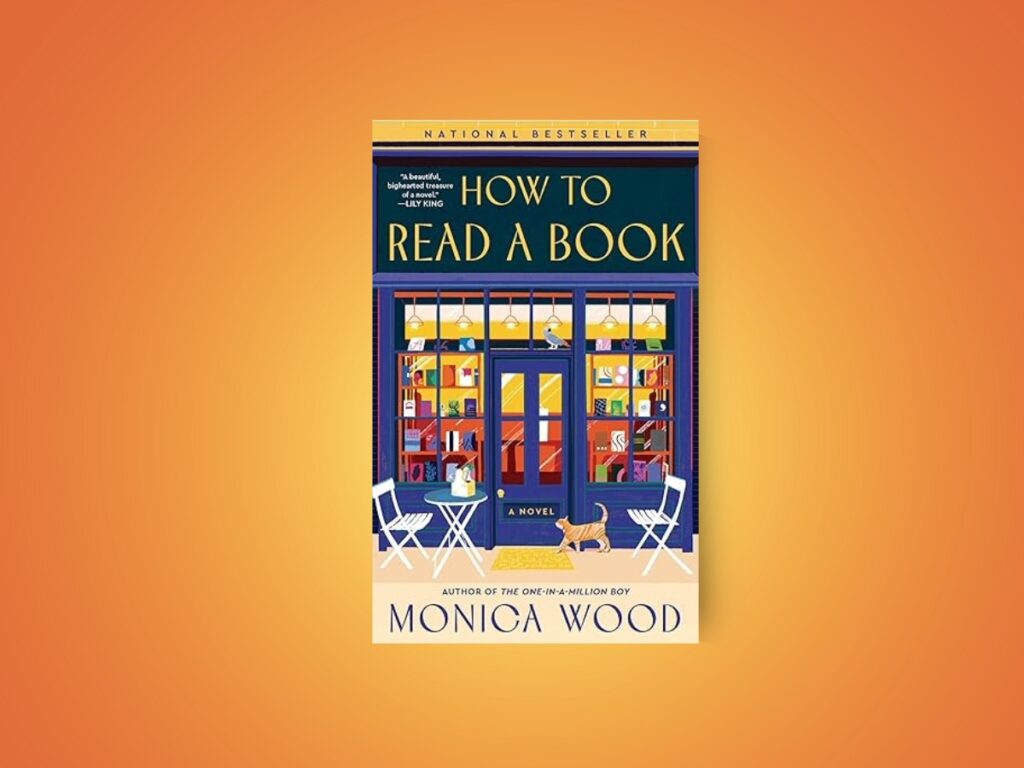
- Is this really a book about how to read a book? Discuss the book’s title and cute bookstore cover. Do they represent what you found inside the pages?
- Forgiveness is an ongoing theme in the book. Violet struggles to forgive herself. Frank surprisingly forgives Violet while struggling to forgive his wife’s infidelity. Frank’s daughter struggles to forgive both Frank and Violet. Violet’s sister Vicki grudgingly forgives her, but their Aunt is having none of it. And who knows whether Mikhail’s wife will forgive him.
Put yourself into the characters’ shoes. Could you forgive? - Against prison policies, Harriett shares a great deal of personal information with her inmate book club group, and it makes her granddaughter very nervous. Was Harriett right to do it? Did she trust the book group too much?
- Have your book group do a round of “when I get out”. Imagine that you’ve been in prison for a few years, what are the things you’d miss the most and what’s the first thing you’d do upon release?
- “Harriet Larson had said yes all her life. To her parents. To her teachers. To Lou and the girls. To Corinne and Sophie. She’d said yes to shopkeepers, to doctors, to car salesmen, to Girl Scout leaders, to Mormons on rounds, to hairdressers who wouldn’t let her go gray. She’d been raised to say yes, to agree and approve and adapt and accommodate, to step aside as the architect of her own happiness. After Lou’s death she vowed to say yes only when that yes belonged to her, solely to her.”
It’s quite common for women in middle age to reach a breaking point whereupon they realize that they must prioritize themselves. Do you relate? - Didn’t you want to slap Tony and Mikhail upside the head, or perhaps fantasize some other sort of misfortune upon their heads? Discuss Violet’s poor choices regarding romance partners.
- “Books won’t solve my problems, Harriet.’. ‘No, but they give your problems perspective. They allow your problems to breathe.” Do books help you in this way? Share a few examples.
- Violet kept returning again and again to the Spoon River Anthology, which was a series of short stories presented as epitaphs. And in the end, we find that How to Read a Book is it’s own (longer) version of Violet’s epitaph.
Did you pick up on that while in the throes of the reading the book? And if not, how did you feel about the reveal at the end of the book? - Using a scale of 1 to 10, with 1 being “my cold, cold heart remains cold” and 10 being “ugly cry and Kleenex”, where did your feels fall?
- “My name was Violet Powell. I took a life. I lived and died. Meanwhile, I was loved.”
What’s your “meanwhile”?
Selected Reviews for How to Read a Book
Use these selected Goodreads reviews to compare with your own experience of the book. Do you agree or disagree with the reviews?
“There were times that Violet frustrated me, but after a while I really understood that the years she spent in prison changed her emotional maturity. I did like how she eventually learned how to stand up for herself.”
“What’s with this title? Honestly…two thumbs down. I like to think as a reader, I know how to read. It could be interpreted as demeaning and condescending. Or, it could be what its intent is: read slower, think about what you are reading and the meaning in what you read.”
“Few books manage to capture the human condition so clearly. Few stories maintain their realism while showing that life is hard. It is unfair. And it often takes more than it gives. But it DOES give. And there is good. And you find it in the most unusual places.”
“Things take a turn in the absolute wrong direction when the main character, Violet, seemingly falls in love with her older, married boss out of nowhere. Cheesy sex scenes and dialogue ensue, even though I felt extremely uncomfortable in the MeToo era watching a young girl being preyed upon by a lecherous boss twice her age (and I wasn’t sure if the author wanted me to root for this drek or if I was to see how wrong it all was). It all comes together in an insanely rushed ending […]”
What to Read Next
If you love the meta of books steeped in book and bookstore culture, I’ve got a few lists for you: books set in bookstores, books about books, books about librarians. For more coming-of-age and friendship stories, try My Friends. The link goes to a guide that has a non-spoiler synopsis and a link to Amazon pricing and reviews.

The Reading List, Sara Nisha Adams
Mukesh is a widower dealing with the grief of losing his wife, and trying to make sense of his new life and the challenges he’s facing. Aleisha is a teen begrudgingly working a summer job at the library, while hiding the painful realities of her home life. She finds a crumpled list in a book which sends her on a quest to read the books, which she then passes on to Mukesh.
The list causes their path to collide in a way that they both need, and the book list changes their lives in meaningful ways.
Read it for book club and use our Reading List discussion guide.
You Don’t Need to Forgive, Amanda Ann Gregory
(Subhead: Trauma Recovery on Your Own Terms)
If you’re interest in exploring more about forgiveness, they may be an interesting counter-programming pick for you.
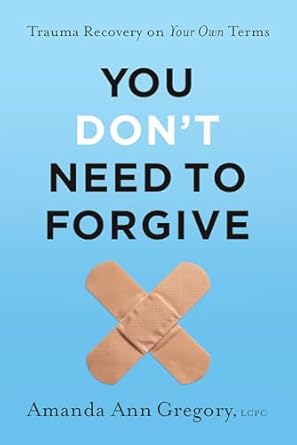
We’ve been programmed to “forgive and forget” as a way to move on after having been wronged. But Gregory argues that sometimes you can go forward without it. She posits that elective forgiveness gives survivors the agency to progress in their recovery on their own terms.
An American Marriage, Tayari Jones
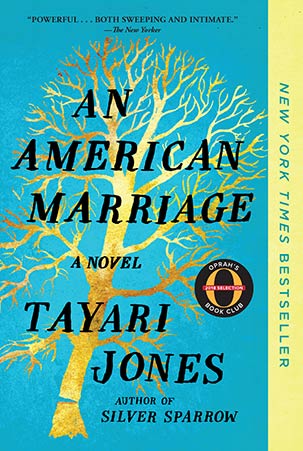
Celestial and Roy have been married for less than a year when Roy, a Black man in a southern town beleaguered by systemic racism, is found guilty of a murder he didn’t commit. With Roy serving a twelve-year prison sentence, Celestial struggles to find meaning and joy in a life she didn’t choose for herself. She is comforted by a childhood friend, Andre, but when Roy is released from prison unexpectedly, Celestial no longer knows where her loyalty lies.
This is a good pick if you want to continue to explore how prison changes a person and what happens when they are released.
Read it for book club and use our American Marriage book club guide.
Recent Fiction Guides
Kin Book Club Questions and Discussion Guide

Whistler Book Club Questions and Discussion Guide

Land Book Club Questions and Discussion Guide

The Calamity Club Book Club Questions and Discussion Guide