So many fiction books are filled with characters who have a lot to say. But John of John is so much about what doesn’t get said. The secrets and silences fill this story about identity, complex family relationships, small town culture and piety.
Cal and John may not have been able to talk openly, but hopefully your book club will be able to do so. I’ll help you get started with these John of John book club questions. This discussion guide offers a book synopsis, 10 discussion questions and some selected (and rather insightful) reviews. And if you want more Ella, moody Scottish weather and fraught family dynamics, scroll to the bottom for some related reads.
(This article contains affiliate links. This means that if you choose to purchase, I’ll make a small commission.)
John of John Synopsis
(I always choose to provide the publisher synopsis because I feel that it’s worthwhile to discuss whether the official book description actually squared with your experience of the book.)
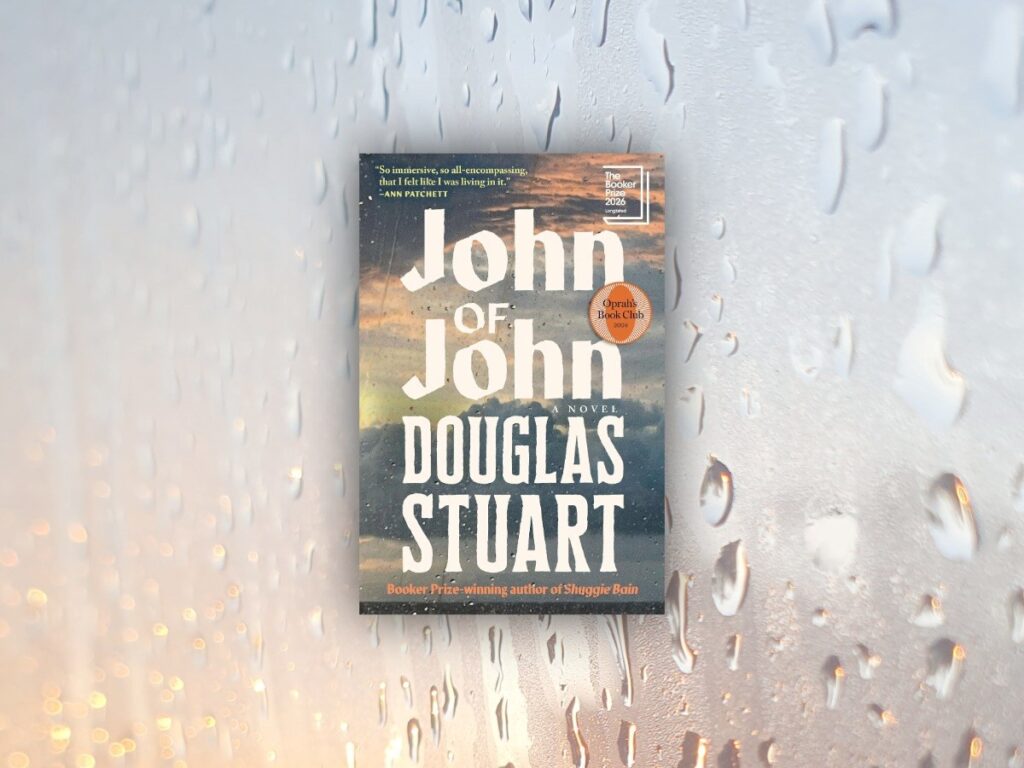
John of John, Douglas Stuart
Out of money and with little to show for his art school education, John-Calum Macleod takes the ferry back home to the Isle of Harris in the Outer Hebrides to find that little has changed except for him. He returns to the windswept croft and the two pillars of his childhood: his father John, a sheep farmer, tweed weaver, and lay preacher in the local Presbyterian church, and his maternal grandmother Ella, a profanity-loving Glaswegian whose steady warmth helped Cal weather the sudden departure of his mother.
Cal privately wonders if any lonely men might be found on the barren hillsides of home, while John is dismayed by his son’s long hair, strange clothes, and seeming unwillingness to be Saved. But Cal isn’t the only one in the croft house who is keeping secrets. As lambing season turns to shearing season, the threads holding together the community together become increasingly frayed, and nothing will remain as it was before.
John of John is a singular novel about duty, passion, and the transformative power of the truth. It is a magnificent literary work that cements Douglas Stuart’s reputation as one of our greatest novelists working today.
10 Book Club Questions for John of John
These questions have been tailored to this book’s specific reading experience, but if you want more ideas, I also have an article with 101 generic book club questions.
- “Every man’s work, pursued steadily, tends in this way to become an end in itself, and so to bridge over the loveless chasms of his life.”, Silas Marner, George Eliot.
“Islanders the world over are born for exile. Islands give you a privileged childhood and then, once they’ve made you what you are, leave you with no place to express it.”, The Living Past, Donald Macleod.
These two epigraphs are found at the start of the book. Pick one and discuss which is more applicable to John or Cal. - Reverend Rose “…was well-respected amongst the congregation for growing up amongst their own, for adhering to rigid Calvinist principle both in the church and inside his own home […] If he seemed more relaxed than their previous ministers it was simply because he understood that the congregation was captive, not just geographically, but by the expectations of their neighbours. They policed themselves through shame and slights and petty judgements much better than he could in his sermons.”
Which of the petty judgments and policing moments really stand out to you? - Innes compared the island to a fishbowl. He said you had to learn to live with your disappointments and your shames because if you thought you had left them behind, you would only swim back around and be hurt all over again. John had argued this wasn’t accurate, because he could never put his failures out of mind and at least in a fishbowl you could look outwards. This, he said, was rats in a bucket.
Is the island a fish bowl or a bucket of rats? - After Ella advises John to tell Cal about Innes, he reflects that “He had no way of knowing how much lying it would take or how those lies would take root, how they needed constant tending, how they would grow thorny and wrap around all those who cared for him until they were all part of the tangle. It seemed a cruel joke, that even as he salted the earth around him, his lies were the most abundant fruit these rocks could ever produce.”
Talk about how John’s primary lie affected those around him. - “Their conversation was always censored, missing the things that they couldn’t talk about.”
So much is unsaid between Cal and John. They circle each other for 400+ pages. Did the events of the last chapter help to break that cycle? Or 15 years on, will they still be circling each other? - Let’s talk about Ella. She was contrarian, funny, profane and a foil for both of the Johns. How was she necessary to the story?
- Standard English is presented in normal text and the Gaelic is presented in italics. Talk about the author’s punctuation choice and more broadly about the use of Gaelic in the story.
- The family farm is a rocky, rainy, remote spit of land. Would you want to live there? And yet, the issue of the tenancy looms large throughout the story. Talk about how the land ownership issue created tension in the story.
- Discuss the conflict between John’s homosexuality, and the strict “dour Presbyterianism” principals that he professes to adhere to.
- It’s like The Clash’s iconic song– Should I Stay or Should I Go. There are those who stay, those to go, those to threaten to go and those to leave and return. Pick a character and discuss their choice.
Selected Reviews for John of John
Use these selected Goodreads reviews to compare with your own experience of the book. Do you agree or disagree with the reviews?
“Once again, Douglas Stuart is viciously attacking my jaded heart with a perfectly composed, beautifully written story about family, community and individuality that has no business being so damn suspenseful until the very last page […] This author has a special talent for interrogating people’s complicated humanity, a talent with religious sensibilities to see their potential for personal salvation through charity and compassion, but also self-love: Part of the impact of his writing stems from the fact that he seems to love his characters a lot more than they manage to love themselves.”
“I really don’t understand what this book was trying to say about… anything? And that’s coming from a queer reader trying to give Douglas Stuart the benefit of the doubt… We don’t need to flatten queer characters and only have them presented as heroic, but we do need to remember the political climate we are in and be cognizant of how we tell these stories. The book portrays a gay man as predatory, opportunistic, and with a notable lack of boundaries around sex — yet never offers up a consequence or commentary about it.”
“I like the way he deals with religion, repressed feelings, and secrets. The characters are all flawed and feel like real human beings. I can’t imagine how hard it must be to struggle with your identity in such a structured atmosphere. While the pacing can be a bit slow at times, it’s a wonderful character-driven story that was deeply moving.”
“The island atmosphere hangs like a cloak over these men.”
“A frustrating, meandering novel with flashes of something really beautiful. To borrow the weaving motif, this book is like a sweater knitted by someone with a wonderful eye for colour and no ability to take measurements.”
What to Read Next
John of John has been nominated for a Booker Prize and was an Oprah’s Book Club pick. If you like Oprah’s vibe, I have some guides for her book picks. Of those, my fave is Caste by Isobel Wilkerson which offers a mind blowing take on race and caste.
If you lean more toward the Booker’s sensibility, I’ve got a bunch of guides for those books too. On that list, my favorite is Small Things like These by Claire Keegen. The book is small, the story is big and the writing is perfection.
If you want more moody weather, I’ve also got a list of books set in Scotland.
Here are a few more options for you:
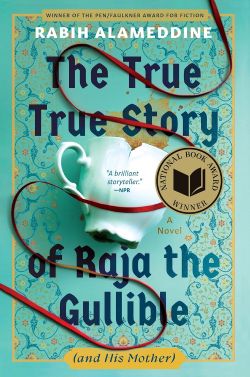
The True Story of Raja the Gullible (and His Mother), Rabih Alameddine
Not only is this the best title ever, but it will also fit the bill if you want another older male gay character, an irascible elderly mother and a culture that’s not very accepting of LGBTQ folks.
This novel reads like a memoir as told by Raja, a queer gullible sixty-three-year-old philosophy teacher living in Beirut. He shares his small apartment with his elderly larger-than-life mother. An invitation to teach a course in the US triggers the narrative, which wanders through Raja’s past relationships, travels and world events that have rocked Lebanon.
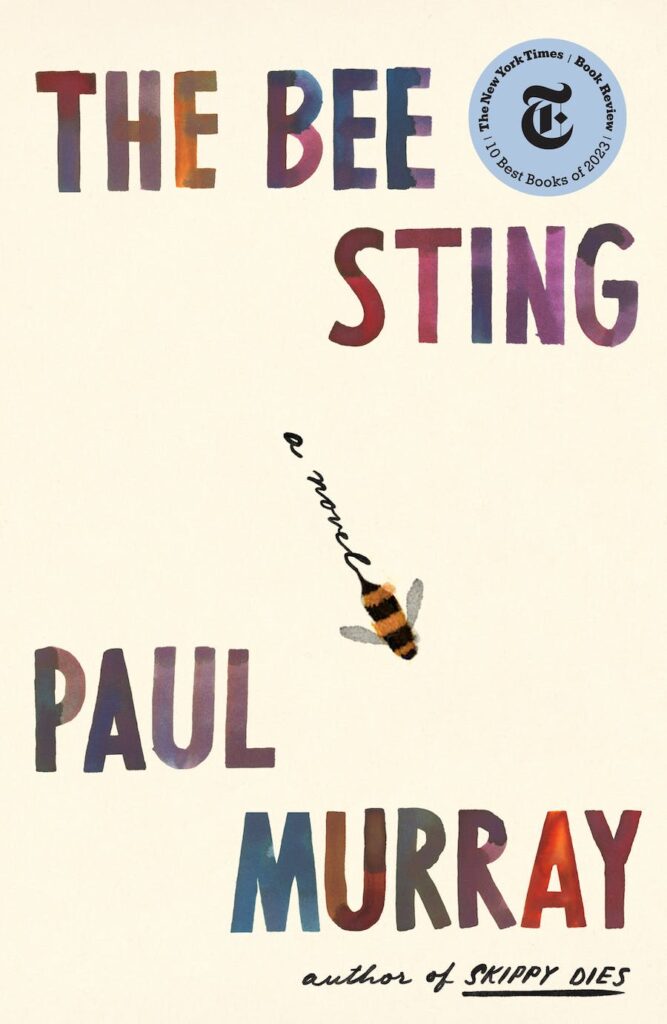
The Bee Sting, Paul Murray
The book got all of the accolades: long listed for the Booker, Kirkus prize, NYT bestseller and on and on. It’s a good pick if you want more complex character-driven family dynamics.
Murray excels at the tragicomic and he really brings it in The Bee Sting. The once prosperous Barnes family is now flying off the rails. Dickie’s car business in in decline and he’s too busy building an armageddon bunker to rescue it. Imelda actually wanted to marry Dickie’s brother, but that didn’t happen and she settled for Dickie. Cass is awash in teen angst and burning down her prospects for college. And poor 12-year old PJ is dealing with bullies and contemplating running away.
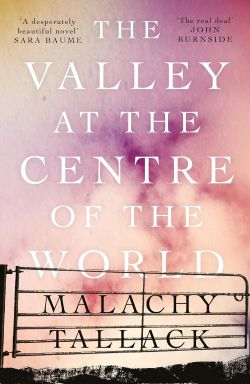
The Valley at the Centre of the World, Malachy Tallack
Here’s a good pick if you just want more moody Scottish landscapes.
This community on the rugged west coast of Shetland is facing extinction. David has lived there all his life but he’s worried that as elders like him die, no young families will come to take care of the valley.
The book deals with issues of community identity and sense of place. It offers up a slice of Shetlands life with the islands themselves playing a major character in this novel.
Recent Contemporary Lit Guides
Whistler Book Club Questions and Discussion Guide

John of John Book Club Questions & Discussion Guide
Mad Mabel Book Club Questions and Discussion Guide
Yesteryear Book Club Questions and Discussion Guide